Showing posts with label save money. Show all posts

Monday, March 26, 2012

20 Ways to Save Money on Everyday Expenses


Saving money and cutting expenses has become a necessity for many Canadians and their families. There are literally thousands of ways that we can save money by making simple changes to the habits that we've developed.

Today we're looking at 20 various ways to pinch those pennies:

Household Expenses   
Grocery Shopping 

Use coupons for the products that you already purchase whenever possible.

Utilize price matching guarantees to save the cost of fuel by driving to multiple grocery stores.

You can save hundreds of dollars each each by comparing price per units on shelf labels. This is great information to store in your price book.

Cleaning Products   

Use sponges rather than paper towel for clean ups and spills. If they become smelly, give your sponges a bath in baking soda and water to refresh them.

Use newspaper rather than paper towels to clean your windows and mirrors. Plus it's the best at a streak-free clean.

Make your own cleaning products rather than purchasing heavily marketed products.


Banking   
Chequing Accounts  

Choose no fee or low fee chequing accounts. Some great examples are PC Financial (with rewards points for groceries) and BMO Club Sobeys (also with rewards for groceries)

Opt for direct deposit whenever possible for employment income, government returns, etc. This will give you immediate access to your money without spending the fuel and time to drive or take pulic transportation to your bank every week.

Inquire about fee discounts for child accounts, student accounts and senior accounts.

Savings Accounts  

Although the interest rates are pretty low these days, it's still best to try to get the most return on your investment dollars. Choose higher interest savings accounts like ING Direct or ALLY.

Credit Cards  

Lower the total interest you pay by paying off your balance every month.

Choose credit cards which have rewards so you get more for using their card services. Remember to pay your balance each month to get the full value of the rewards you've earned.

Do not pay annual fees to have a credit card in your wallet. There's plenty of credit card options that are free of annual fees.

Tax Time 

Complete your taxes as soon as your slips arrive. The sooner you file, the sooner you receive your refunds and can invest it to start earning a return.

If you owe money at the end of the year for taxes, it's best to pay your outstanding debt as quickly as possible to avoid accrued interest charges.


Transportation   
Fueling Your Vehicle   

Avoid the weekend prices by refraining from filling up on Fridays as well as the day before long weekends and holidays.

You can save up to $100 a year on your gas bill by keeping your engine tuned and your tires properly inflated. Check your vehicles manual or wall of tire for proper inflation details.

Reduce the amount of money you spend on fuel by following these fuel conservation tips.

Insurance 

If you don't drive very often, your car insurance may be less. Check with your insurance company to see if they offer a discount for individuals who drive fewer than the specified number of kilometers each year.

Take advantage of affiliate discounts such as College Alumni, employer, club, etc when applying for or renewing your insurance. Ask your insurance company if they have association discounts.


Car Rentals  

Rental car companies offer various insurance and waiver options. Check with your won auto insurer in advance to avoid duplicating any coverage that you may already have.


We continually discuss and review the various ways to save money. For more ideas on how to cut expenses and put more into your pocket, click here. We love to hear the ways our readers save their biggest dollars too! Please leave us a comment below.

Wednesday, February 29, 2012

15 Fuel Conserving Tips to Help Save Money With Soaring Fuel Prices

With fuel prices on the rise, it's wise to implement simple money saving tips to help conserve fuel when driving and to offset the soaring gas prices, such as these:

1. Keep tires properly inflated, having tires 2 PSI below optimal pressure increases fuel consumption by one percent.

2. Keep your car regularly maintained. Inspect and change car filters as clogged air and oil filters waste gas.

3. Avoid overloading your trunk and pack lightly on trips.

4. Avoid high speeds driving 20 km over 100 km a hour consumes 15% more fuel.

5. Plan all your trips for the week or day to avoid wasting unnecessary fuel by back tracking.

6. Consider car pooling to work with other co-workers.

7. Avoid idling your car for a long time long. Idling burns more fuel than restarting your car.

8. When driving on the highway keep windows closed too avoid drag. Open windows can increase fuel consumption by 10 percent. This is when air conditioning becomes most economical.

9. Do not accelerate or brake hard.

10. Use your air conditioning sparingly.

11. Use cruise control if available on flat roads but on hills it is much more economical to supply more power as the car requires, letting the momentum of the car do the work as much as possible. It takes some practice but it's easier on the fuel tank overall.

12. Avoid bumper riders, especially on long trips where fuel consumption is high as it is. If you have someone tailing you too close, they're probably using your fuel and coasting in your wind tunnel. Slow down, put your hazards on and let them pass. Don't let them burn up all your fuel.

13. In the wintertime, clear ALL of the snow off your car, not just off your windows. The extra weight of the snow adds to the cost of fuel consumption.

14. Don't add drag by carrying a load on your roof. It can significantly reduce your fuel mileage.

15. Walk where you can or ride a bike to destinations close by without using your car.


Rewards Programs For Fueling

1. If you shop at Refuel stations (part of No Frills grocery stores) save your receipts and then present them when you shop at No Frills to save a little off your grocery bill for each receipt presented.

2. Also if you like to shop at Canadian Tire fuel stations, then make sure you utilize the BONUS coupon on the flyer to get extra Canadian Tire Money! Lots of times you can earn up to 10X the CTC money. Plus once you save up $25 in CTC money, bring it to the store and purchase a gift card with it and then use it to purchase your fuel.

3. Use your Aeroplan card at Esso stations to get bonus points with each fill up. Plus you can get Esso Extra points too!

4. Some credit cards like Canadian Tire and Petro Canada offer 10 cents off per litre or other discounts.

5. Costco members save 10 cents per litre at Costco gas stations.

6. Pioneer has a Pioneer Bucks Card to get reward "bucks," save it up and you can use it towards gas purchases.

(Thanks to the members of Freebies Deals And Rewards)

Wednesday, January 25, 2012

Homemade Laundry Detergent Recipes


I make a some of my own homemade cleaners, but I've never tried making my own laundry detergent at home. I know many people who do make it rather than buy it, and swear it's better than any commercially made soap. They would never change back to store bought laundry soaps. I gathered a couple of different recipes to share with you.

Homemade Liquid Laundry Detergent Recipe #1

7.5 litres hot water
1 bar soap (grated)
2 cups baking soda

Directions:
  • Melt the grated soap in a saucepan with enough hot water to cover it. 
  • Heat on medium-low heat, stirring frequently until soap has melted.
  • In a large pail, pour 7.5 litres of hot water and add the melted soap. Stir well.
  • Next, add the baking soda, stirring well.
  • Store in a sealed pail or in plastic laundry detergent jugs.
  • Stir or shake soap mixture (depending on storage method) before each use.
Using the Soap: Use 1/2 cup per full load or 1 cup for heavy soiled loads

Approximate costs of supplies: $0.60 to $2.00 (plus electricity to heat the water)
- Bar Soap $0.10 to $0.50
- Baking Soda $0.50 to $1.50

Homemade Liquid Laundry Detergent Recipe #2

2.5 litres hot water
5 litres cold water
1/2 cup washing soda
1/2 cup borax
1/3 bar soap (grated)

Directions:
  • In a large pot, heat 1.5 litres of water. Add the grated soap and stir until melted. 
  • Next, add the washing soda and borax. Stir until powder has dissolved and remove promptly from heat.
  • In large clean pail, pour 1 litre of hot water and add the heated soap mixture. Add 5 litres of cold water and stir well.
Using the Soap: Use 1/2 cup per load, stirring soap before each use (mixture will gel)

Approximate Cost of Supplies: $1.18 to $1.92 (plus electricity to heat the water)
- Bar Soap $0.03 to $0.17
- Borax $0.55 to $0.75
- Washing Soda $0.60 to $1.00

Homemade Powder Laundry Detergent Recipe

8 cups baking soda
8 cups bar soap (grated)
12 cups borax
8 cups washing soda

Directions:
  • Mix all ingredients well and store in a sealed tub.
  • Use 1/8 cup of powder per full load.
Helpful Tips:
  • use bar soaps such as Ivory, Sunlight and avoid heavily perfumed soaps
  • washing soda and borax can be found in the cleaning/laundry aisle
  • recipes can be adjusted to suit your needs, experiment
  • make larger batches in pails and then transfer to laundry bottles for storage (ask a friend or neighbour for their empty bottles) then just shake it before using
  • hardware store carry 5 gallon pails for $4-6, watch for a sale or store coupon

There's many variations for homemade laundry detergent. If you have a recipe that works for you, please share with us by commenting below. We love to hear from our readers.

Monday, January 2, 2012

Resolutions to Save Money in The New Year


With post holiday season and the start of a new year, it's time to get back on track with your personal finances while most of us are motivated to accomplish our new year's resolutions.

Here are a few simple steps to help you save money in the new year:
  1. Create a realistic budget that will really work!
  2. Go back to the days before ATM cards and withdrawal the amount of cash you need for your weekly or bi-weekly expenses (depending on your pay schedule) rather than using your card for each and every transaction.
  3. Stop using those credit cards.
  4. Make sure that you have a cushion or slush fund to cover you financially in the event of a downturn or an emergency.
  5. Split up unexpected winfalls of money that come your way!
  6. Avoid the budget busters.

Creating a Simple But Effective Budget
  • Establish a savings goal (education, retirement, renovation, vacation, etc)
  • Track your spending habits, using your sales receipts for 1 or 2 months to see how your spending compares to the amount of money coming into the household
  • Review your spending habits and figure out where you can cut or trim some expenses; viewing where the money is spent can really put a perspective on wasted dollars
  • Return to your budget on a regular basis to confirm that you are on track to reaching your savings goal; make adjustments when necessary
Why Cut Your ATM Card?

You don't have to literally cut your ATM card or debit card. However, unless you have free or unlimited transactions with your bank, these are fees you can avoid by using cash instead. One of the best examples of using cash in a manner that is effective, is the technique taught by the money maven Gail Vaz-Oxlade on Til Debt Do Us Part. She instructs the guests of her show to divvy up the money set forth in their budget in jars labelled for their expenses. They can literally see how much or little the jars contain after they spend from each. If jars aren't your thing, an envelope labelled with the expense name would work just as well.

Stop Using Those Credit Cards

Unless you are strictly disciplined to pay your balance off in it's entirety each and every month, I would recommend that you put away those credit cards. The interest that you accumulate on borrowed purchases will not end up being cost effective overall. If you always practice paying your credit card in full, then there is an advantage to earning loyalty reward points on your purchases.

Split Up Unexpected Windfalls Of Money Into Thirds

Whenever you have an expected windfall of money, such as a gift card from a survey, a bonus from work, contest prize, etc; divvy it up into three equal shares as follows:
  • The Present - Use one third of the money to buy something for yourself personally or towards a home improvement or personal improvement
  • The Past - Use one third of the money to cover past debts that you owe
  • The Future - Use one third of the money to save for the future in a savings account, TFSA or another investment vehicle
An Emergency Fund Or Slush Fund For Unexpected Expenses

Experts state that a three month operating budget is the MINIMUM that you should set aside as your emergency fund. How do you figure out this number? Track all of your spending for a month including all of your bills and incidentals, then multiple by three. This money should remain liquid for you in some form of a deposit account. (Liquid means that it should not be locked into an uncashable investment tool, it must remain accessible.) While it's nice to make some interest on this money, it's really there to bail you out of a jam. The amount of interest earned in really inconsequential to the peace of mind this money will give you.


Avoid Blowing Your Budget With The Worst Budget Busters
  1. Having no emergency or slush fund. In the event of an emergency where you do not have a cushion in place, it can set you back by needing to find some kind of loan or using any asset you have to bail out.
  2. Budgeting too rigidly. If you budget too strictly and don't allow yourself some fun, then you could end up deviating from your budget and overspending. It's like a dieter who doesn't allow themselves a dessert now and again, they might end up binge eating. Allow yourself some small indulgences in your budget to keep you on track.
  3. Gift giving. Buying our friends and loved ones gifts is a type of emotional spending that can have people dish out more cash than they can actually afford. Limit gift exchanges to a couple of close people in your life and include these expenses in your budget.
  4. Impulse buying. Following a detailed budget will allow a person with impulsive buying habits to see exactly where the money would be coming from. For example, should they borrow from their grocery money to buy a new pair of shoes. The impulsive buy may not look as attractive when you look at where the money is coming from.
What are some other simple yet effective ways that you save money and trim your expenses?
  • Use coupons and price match your purchases whenever possible
  • Learn about SCOP and take advantage of price errors
  • Join loyalty rewards programs and get rewarded when you buy
  • Complete compensated surveys online to make extra cash/gift cards
  • Follow gas savings advice and tips 

Wednesday, November 9, 2011

Make Your Own Christmas Crackers and Save Money

Save money this year and make your own Christmas crackers. Stretch your dollar even further plus be kind to our environment and reuse the Christmas crackers year after year!

SUPPLIES:
Toilet rolls or paper towel rolls - cut to desired size
Scraps of Christmas fabric
1 1/2 to 2" spools of ribbon
1/4" spools of ribbon
Christmas Cracker Snaps
Tissue paper to make paper hats - if desired
Jokes or sayings for inside Christmas Cracker
Small chocolates
Small gifts or prizes

INSTRUCTIONS:
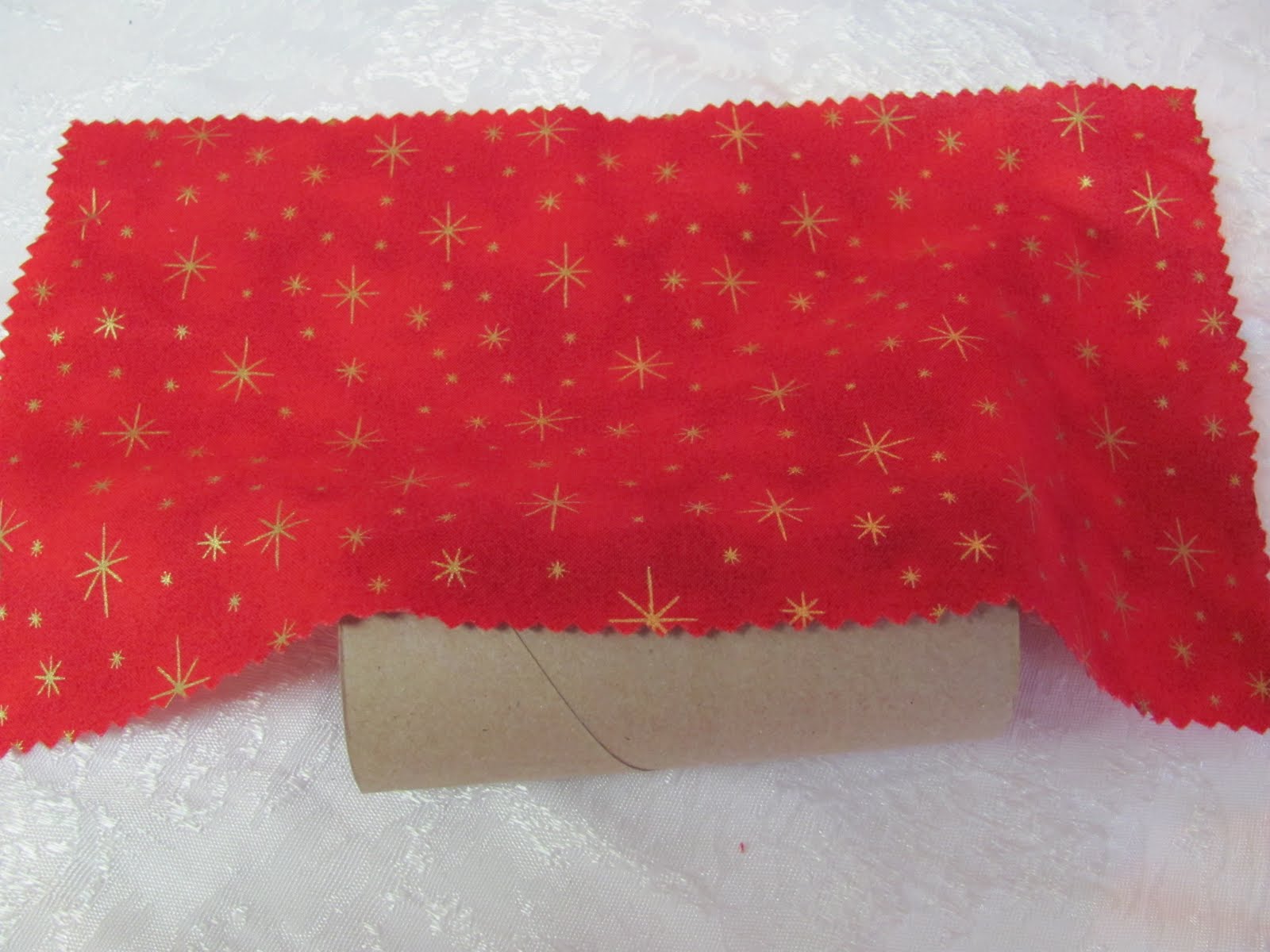
Cut pieces of fabric approximately 7" x 11" using pinking shears, if available. If you use bigger rolls for the base of your Christmas crackers, roll the tube in the fabric before cutting, gather up one end to determine approximately how much fabric should be left to wrap ribbon around it. For a tube that is 4" long, I have a 3 1/2" overlap at each end. You also need to allow about 1 1/2" of the circumference of the tube for over lapping. (if you have a sewing machine, you can do a narrow zigzag around the edges of the cut fabric)


Mark the centre of the tube and the centre of the fabric


Using your glue gun, run a bead of glue the length of your tube near your centre mark. Match up the centre of the fabric to the centre of the tube and press the fabric lengthwise into the bead of glue.

Roll the fabric around your tube and run another bead of glue on the tube and press the fabric into the glue so your tube is now completely wrapped in your Christmas fabric.

Take your wide ribbon, run a bead of glue at the end, centre it on the tube and press, bring the ribbon around, so it overlaps about 3/4". Cut and fold the raw edge under, run another bead of glue on the ribbon and place it carefully over where the ribbon started.

The length of thin ribbon you use to wrap the ends of your crackers, will depend on how big you want your bow to be. Before cutting off strips of ribbon, pull off about 2 feet so you have lots to work with (don't cut it) Now gather in one end of your Christmas cracker, wrap your ribbon around it, tie it and make a bow. When you are satisfied with how it looks and how much you want on the tails, mark it, then undo your bow so you can measure how much you used. You will now know how much to cut each ribbon, without wasting any. If you are going to reuse your Christmas crackers each year, you can put a small bit of glue in the centre of the ribbon, and glue it to the cracker where you will be gathering it in. That way you will always have the ribbons attached to the crackers.

While paper hats are always included in the Christmas crackers, I find most people don't wear them as they never fit and they are just added to the mounting pile of trash, therefore I don't bother with them. However if you do want to make them, take one sheet of tissue paper and fold length wise. Measure an adults head then divide by 2 and add about 1" so you can glue the edges together.

ie: if the head you measure was 24" you will need to cut your folded paper 13" (remember it's folded lengthwise)so you have 2 pieces that are each 13". Run a glue stick about 1/2" at each end of one sheet and stick them together. Draw 3 peaks in the folded edge, cut and you have your paper hat that should be 24".

What you decide to put into your Christmas crackers is up to you. I save chocolates from Halloween, but you could buy more expensive chocolates to use. Instead of the really cheap trinkets that are included in the store bought Christmas crackers, you could buy things to personalize them.

For young boys, you could use hotwheels. (These are often on sale) For girls, there are barretts, lip gloss, small gel pens. Often they have great stickers that are themed that both boys or girls would like. If someone collected angels, you may find a small angel that would be perfect or for someone who likes to sew, perhaps a fancy thimble. I don't think you can go wrong with Scratch tickets as everyone of all ages seems to like them.

If you have certain colours that you use in decorating your home, you could buy fabric for your Christmas crackers to complement your colour themes.

You could use the Christmas Cracker as the wrapping for a special gift for someone. Make a really fancy Christmas Cracker and it could hold a bracelet, necklace or watch for instance.

Of course you need to include a joke or inspirational saying. I used a search engine and typed in "Funny Christmas Riddles and Jokes" and found lots to choose from.
I have bought the Christmas Cracker Snaps at Michaels in the past, but you could also using search engine to see if you can find a distributor.

STORAGE:

If you plan on re-using your Christmas crackers, find a box that is big enough to store them in. I use discarded Christmas wrap, and stuff the tubes so they don't get flattened.


For more frugal Christmas decorating ideas, visit my Angel Decorations project and my Handmade Greeting Cards project.

Wednesday, August 17, 2011

Save Money Using The Internet

From the very first day that I plugged in my (now recycled and replaced) computer and connected to the world wide web or the Internet; I've been researching ways to save money and stretch my dollars. I have a number of strategies that I use to make my dollar go further and spend less overall.

1. Freebies and Samples: are a fantastic way not only to try new products, but to also save on the amount of money you spend on these items. Freebies Deals And Rewards offers weekly free sample offers for members only on Fridays. Living Well offers free samples approximately very second week. P& G Brandsampler offers a lot of samples every 4 months. Plus if you check the websites or social pages of the products you use, you'll be surprised how many have some type of customer promotion. See the freebies and samples shared at FDR freebie forum.

2. Coupons and Rebates: are a huge portion of how I save money using the Internet. I use forums like Freebies Deals Rewards to look for coupons and check sites like, Save.ca, Websaver.ca, GoCoupons.ca, Brandsaver.ca, Right@Home, Life Made Delicious and Live Well Save Well. Click here for all of the above coupon sites. I also look to trade coupons with other fellow Canadian couponers. I join coupon trains, learn more about Coupon Trains here.

3. Comparison Shopping and Price Matching: I never shop online or offline without checking prices first. Comparison shopping can save an individual or family thousands of dollars every year! There are shopping comparison sites like Canada Post Comparison Shopper or Price Canada and you can also use online flyers or paper flyers to comparison shop. I also match the sales in the flyers to the coupons I have on hand to save even more. Plus when you price match using sales flyers as select retailers, you can cut the time spent on your shopping trips and save big too!

4. Cash Back Shopping: Air Miles and Aeroplan collectors should always check if the retailer they are shopping at has a link in either of the online malls. This way you can earn bonus miles for shopping at the places you already intended to spend money at! Plus, they both offer special promotions to earn extra miles on certain purchases.


5. Sign Up For Brand Newsletters: visit the websites of the brands you use and sign up for the email newsletters. Often companies use e-news to share valuable discount codes and other exclusive promos. You could get coupons, discounts, contests, free samples, event notifications and more.

6. Use Google or Other Search Engines: to search out discount codes for online shopping using terms such as "e-coupon", "promo code", "discount code", "coupon code", "promotional discount", etc. along with the name of the company you wish to save at.

7. Free Shipping Offers: if I'm shopping for items that I do not need immediately, I usually consider shopping online to save fuel and time. So, to maximize my savings, I look to shop online during special offers of free shipping or I may combine my purchases if there is a minimum dollar amount to spend to qualify for free shipping. Click here for online retailers offering free shipping.

8. Shopping With Credit Cards: Visa offers cardholders discounts when shopping a select stores through a program called Visa Perks. Check your credit card statement for inserts that could help you save money on your purchases.

Are there other ways that you save money online?

Wednesday, July 13, 2011

Save Money By Price Matching Your Purchases

 
One of the hottest ways to save money these days, aside using coupons and group buys, is to price match. BUT don't forget to bring your coupons with you and save even more money by using coupons in conjunction with your price matches. Now that's smart shopping!

Price matching is available at many different retailers, including grocery, hardware and housewares, electronics, general merchandise and so much more.

Read more about Price Matching. You'll find price matching tips, a list of Canadian stores and extra insider tips to make price matching go smoother.

Wednesday, March 30, 2011

Save Money Grocery Shopping - Before Shopping, While Shopping and After Shopping

Before Shopping
  1. Check your cupboards, fridge, freezer and pantry to verify what you already have. Avoid spending money now on things you don't need right now.
  2. Look at the grocery store flyers for the store(s) you shop at.
  3. Write a list ~ avoid impulsive buying. Take it with you while you shop and stick to it!
  4. Bring your reusable grocery bags. Save $0.05 from each bag at GTA retailers plus some point programs will give you bonus points for using the eco-bag.
  5. Have a bite to eat, it really is harder on your wallet if you're hungry while shopping.
  6. Prepare your menu for the entire week using what you already have, and what's on sale in the flyer.
  7. If you can grow it or make it yourself, you are bound to save money,
  8. Make a price book for the items you regularly shop for. You can record the prices in an address book, spiral notebook, on index cards, a daytimer or whatever suits your preference. This is a powerful resource for shoppers to determine if an advertised special is truly a good deal or not.
  9. Shop for items before they run out and buy when they are on special. If you wait until you are completely out, you must pay whatever price the stores are charging.
  10. Avoid trips to the corner shops and convenience stores. They will quickly burn a hole in your pocket.
  11. Early morning shoppers can often take advantage of price mark downs on bakery items, fruits and vegetables.
While Shopping
  1. Take out your grocery list and stick to it!
  2. Most bargains can be found on the higher and lower grocery shelves. The more expensive brands are usually stores at eye level in order to get your attention.
  3. Stock up during sales! If you can afford to, you should stock up on non-perishable items and freezable items to save money overall.
  4. Keep your eyes peeled for unadvertised specials.
  5. Take coupons from displays if you are purchasing the products.
  6. Try generic brands instead of name brands. Many are comparable to the brand names and most offer refund if not satisfied.
  7. Check the reduced merchandise and day old breads for more savings.
  8. If an advertised special is not available, ask for a rain check so you can still buy it at the advertised price when restocked. These usually expire in 2-4 weeks; be sure to check the expiry date.
  9. Alternative protein sources, if you want to save money in the meat department are: cheese, poultry, eggs, peanut butter, dried peas, beans, and lentils.
  10. Always check expiry dates on foods, especially dairy and meats.
  11. Use store specific savings cards and/or reward cards.
  12. Use free product coupons and cents off coupons to lower your bill.
After Shopping
  1. If a product is spoiled or you forgot to check the expiry date, return it for a refund.
  2. Check out the store flyer's and plan to shop where you will save the most money. Refer to your price book as a guide.
  3. Mail off rebates for products purchased and get some of your money back!
  4. Shop at bakery outlets and freeze the bread and buns you buy. They are usually cheaper than the supermarket plus breads are able to freeze and thaw well.
  5. Learn the sales cycles of the stores you shop at.
  6. Start a shopping pool with your family and neighbours for basic necessity items that are on sale. Whenever someone in the pool goes to a sale, they buy for the others in the pool. (Of course everybody in the shopping pool has to pay for their own items).
Find more valuable tips at the Source of information.

Sunday, March 20, 2011

Are you paying too much? Do you know about the Scanner Price Accuracy Voluntary Code -- Code of practice?


Are you aware of the Scanning Code of Practice for Scanner Price Accuracy? If you don't know about this, then you may be paying too much for some of your store purchases.

Key Features of the Code

The Item Free Scanner Policy – The Retailers’ Promise of Price Accuracy.

If the scanned price of a non-price ticketed item is higher than the shelf price or any other displayed price, the customer is entitled to receive the item free, up to a $10 maximum. When the item has a price tagged, the lowest price applies. When identical items are incorrectly priced, the second one will be sold at the correct price.

What does the Code cover?

The Code covers all scanned merchandise at participating retail outlets where this sign is displayed at the store entrance or checkout.

Scanning Code of Practice

If the scanned price of a non-price item is higher than the shelf price or any other displayed price, the customer is entitled to receive the first item free, up to a $10 maximum. If a Code of Practice problem cannot be resolved at the store level, please call 1-866-499-4599 to register your complaint.

What is a non-price ticketed item?

A non-price ticketed item is any bar coded merchandise that does not have a price affixed to the merchandise.

What happens if two or more identical non-price ticketed items are incorrectly scanned?

Customers are entitled to the first item free (up to a maximum of $10) and the subsequent item(s) at the correct price.

How can I claim my refund?

Cashiers are authorized to implement the Item Free Scanner Policy.
If you are not satisfied with the cashier’s decision, you may speak to the store manager or supervisor.
If you are still dissatisfied with the outcome, you may register a complaint with the Scanner Price Accuracy Committee, by calling 1-866-499-4599 (toll free).
Your complaints and concerns will be addressed with the retailer, and you will be notified of the outcome.

Where can I get more information about the Code?

You may obtain a copy of the Code from the Competition Bureau’s web site at http://www.competitionbureau.gc.ca/.

You may also visit the web sites of the participating retail associations at:
Source

Canadians Never Pay Full Price For Your Purchases Again!!


NEVER pay FULL price again!! Here's 20 tips for saving on each purchase:1. Mom always said that it doesn't hurt to ask; so ask for a discount on the items you're purchasing. You can usually get a 10% discount at most places just by asking for it.

2. Join loyalty clubs for all of the stores you shop at. This will give you access to discounts, free offers, gifts and more.

3. Use COUPONS! You can get coupons for everything from clothing to fast food to fancy food to groceries to fuel to automotives, pharmacy products and virtually all other products in between. Join mailing lists either by mail or online for your favourite products to get possible savings. Check to see if the store offers stacking or doubling or coupons.

4. Shop at consignment shops, estate sales, yard sales, garage sales, online auctions like ebay, liquidation outlets and live auctions. It's essential that you know your pricing to make sure that you are in fact getting a savings!

5. Buy shelf models or floor models and ask for a "no box" discount or a "display" discount.

6. Watch for and ask for your senior discount, employee discount, affiliation discount, child or school-age discounts, military discounts, etc.

7. Join group buying sites which service the area where you live and work. Such as Groupon, Living Social, TeamBuy, Push A Deal, Project Pink and more.

8. Buy floor models and ask for knick and dent discounts. Often the store manager will offer from 10 to 20% discount off the displayed price.

9. Shop at the warehouse and outlet stores for your favourite retailers to save even more money. There are a range of factory outlets including clothing, food, toys, etc. In the Greater Toronto area, you can find Mattel Toys, Maple Lodge Farms, Mr. Christies, Molinaro's, Lindt and others.

10.  Always check the discount bins or clearance section in stores. Often the packages have been opened but everything is intact or it might be the end of the season and the stores need the room for the next big promotion; so you can usually get some terrific deals.

11.  Price matching or ad matching can reduce the amount you pay for an item too. Check if the stores you shop at offer such a policy and actively look for better prices to save more money.

12. Use a SPC card either the regular student or the VIP card to get discounts at many stores.

13. Take advantage of mail-in rebates. BUT, we would highly suggest that you do it IMMEDIATELY when you get home, so you don't forget. It's a good idea to keep a booklet of stamps at home for these types of offers.

14. If you live in Toronto, there's a discount card for GREEN shoppers! It's called Live Green Toronto.
Join the growing number of shoppers who choose to support green-committed businesses in Toronto. Show your card at participating businesses to receive special offers and discounts.

15. Join survey groups which pay in loyalty rewards. Harris Poll pays in Aeroplan Miles, Web Perspectives pays in Air Miles and Asking Canadians pays in HBC Reward Points. Once you accumulate enough ponts, you can cash out for gift cards, reducing the overall amount of money that you dish out of your pocket.

16. Look for discounted gift cards on www.cardswap.ca and save up to 40% on Canadian gift cards. Some offer smaller discounts but it's often enough savings to cover most of the taxes.

17. Shop at Thrift stores and second hand stores as well as consignment shop. There are many great deals for a fraction of the retail price of brand new merchandise.

18. Use free long distance services where you may just listen to an ad first to save money talking on the phone. There are several free apps to save money on your smartphone too!
19. Check out price comparison websites prior to shopping to find the cheapest prices at different retail stores.

20. Use a beauty school to have facials, manicures and pedicures. The cost is significantly less than going to a parlor. You could also check hairdressing schools for cheap haircuts, food preparation colleges for cheaper restaurant meals, massage therapy schools for discounted massages, dental schools for a student cleaning for less money and there may be others that haven't come to mind.

Creative Canadians are always coming up with new ways to get discounts on their purchases. If you have a tip that isn't here, we'd love to hear from you!

Source